
Amazon suspensions in 2026 are no longer unpredictable.
In almost every case we handle, the root cause comes down to how the seller sourced products and whether Amazon can verify their supply chain.
As a reactivation team that works daily with suspended Amazon sellers across the US, UK, UAE, and EU marketplaces, one pattern is consistent:
- Retail Arbitrage accounts get suspended far more often than Online Arbitrage accounts.
Yet many sellers continue using Retail Arbitrage without realizing the risk — until their account is suddenly deactivated.
This guide explains which model triggers more suspensions, why Amazon flags them differently, and what sellers must do to protect their accounts in 2026.
Which Arbitrage Model Causes More Suspensions?
Based on real suspension cases we investigate every week:
- Retail Arbitrage (RA) → 🔴 Highest suspension rate
- Online Arbitrage (OA) → 🟠 Moderate risk
- Wholesale / Authorized OA → 🟢 Lowest risk
Retail Arbitrage is responsible for most:
- Inauthentic product violations
- Supplier verification failures
- Sudden deactivations with limited appeal success
Why Retail Arbitrage Triggers the Majority of Suspensions
Retail Arbitrage involves sourcing products from physical stores such as Walmart, Target, Costco, Carrefour, or local retailers. While the products are genuine, Amazon does not recognize these stores as valid suppliers.
Retail Receipts Are Not Accepted by Amazon
This is the biggest mistake RA sellers make.
Amazon requires:
- Business invoices
- Supplier contact details
- A verifiable supply chain
Retail receipts fail all three requirements. When Amazon requests invoices and receives store receipts instead, the result is usually:
- “Inauthentic product” suspension
- “Unable to verify supplier” violation
- Appeal rejection
At this stage, many accounts become extremely difficult to reinstate.
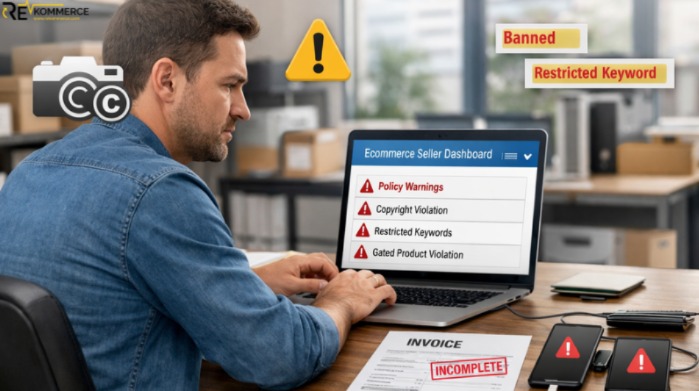
IP Complaints Are Far More Common in Retail Arbitrage
Retail stores mainly sell brand-protected products. These brands actively monitor Amazon and file IP complaints aggressively.
From our cases:
- A single IP complaint can remove an ASIN immediately
- Multiple complaints often lead to full account deactivation
Amazon rarely supports arbitrage sellers when brand owners complain, especially without authorization.
Product Condition Issues Accelerate Deactivation
Retail-sourced inventory frequently has:
- Shelf wear
- Opened or damaged packaging
- Expired or near-expiry products
This leads to:
- Customer complaints
- “Used sold as new” claims
- Account Health deterioration
Once complaint patterns appear, Amazon escalates the investigation.
Why Online Arbitrage Is Safer — But Not Safe
Online Arbitrage is not immune to suspension. However, it offers better control and traceability.
OA sourcing typically involves:
- Online wholesalers
- Clearance suppliers
- Small eCommerce businesses
The difference is documentation.
Invoices Give Sellers a Fighting Chance
Many OA suppliers provide:
- Business invoices
- Consistent billing information
- Verifiable contact details
While invoices do not guarantee approval, they dramatically improve appeal success rates.
Most successful reactivations we handle involve Online Arbitrage sellers who can submit proper invoices.
The Most Common Online Arbitrage Mistakes We See
Many sellers assume that “online” means compliant. This is not true.
We regularly reinstate accounts suspended for sourcing from:
- Walmart.com
- HomeDepot.com
- Amazon
- AliExpress
Amazon identifies these suppliers instantly. Documentation from these platforms often leads to automatic rejection.
Online Arbitrage only works when suppliers are:
- Independent businesses
- Operationally consistent
- Not recognized as retail marketplaces
Suspension Triggers We See Every Week
Retail Arbitrage
- Retail receipts rejected
- IP complaints on branded products
- Packaging and version mismatches
- Condition complaints
- No acceptable supplier proof
Online Arbitrage
- Non-authorized online suppliers
- Incorrect or altered invoices
- Shipping delays causing ODR issues
- Product variation mismatches
- Repeated sourcing from flagged platforms
Which Model Should Sellers Choose in 2026?
From a reactivation and compliance standpoint:
| Business Model | Suspension Risk | Recommendation |
| Retail Arbitrage | Very High | Not sustainable |
| Online Arbitrage | Medium | Requires strict supplier vetting |
| Wholesale / Authorized OA | Low | Best long-term model |
Why Many Appeals Fail (And How Professionals Fix Them)
Most sellers fail reinstatement because they:
- Submit receipts instead of invoices
- Don’t address the root cause
- Reuse generic appeal templates
Professional reactivation focuses on:
- Identifying the exact violation trigger
- Rebuilding supplier credibility
- Writing policy-aligned appeals backed by evidence
This is why experienced teams achieve higher reinstatement success rates.
Retail Arbitrage causes more suspensions because it fails Amazon’s documentation and brand-protection standards.
Online Arbitrage is safer only when suppliers are verified and invoices are compliant.
If your account is suspended — or at risk — early, professional intervention matters.
The longer a suspension remains unresolved, the harder reinstatement becomes.