
Wholesale selling on Amazon offers serious profit potential with less risk than private label—or so most sellers think. The margins are solid, the products are proven, and you’re not manufacturing anything from scratch. But there’s one issue that catches wholesale sellers off guard more than anything else: intellectual property violations.
I’ve worked with wholesale sellers who built six-figure businesses only to lose everything because of IP complaints they didn’t see coming. The worst part? Most of these violations were completely avoidable. They weren’t selling counterfeits or trying to scam anyone—they just didn’t understand how strict IP enforcement has become on Amazon.
If you’re running a wholesale business in 2026, understanding IP compliance isn’t optional. It’s the difference between sustainable growth and sudden account suspension. Let me walk you through exactly where wholesale sellers go wrong and how to protect yourself.
The IP Violations That Destroy Wholesale Accounts
Using Supplier or Brand Images Without Permission
This is probably the most common mistake wholesale sellers make, and it feels harmless at first. Your supplier sends you product images along with your order, or you download high-quality photos from the brand’s website to make your listings look professional. What could go wrong?
Everything, actually. Just because you’re selling authentic products doesn’t mean you have the right to use someone else’s photography. Those images are copyrighted creative works, and using them without explicit permission is infringement.
What makes this especially frustrating is that many suppliers will tell you it’s fine to use their images, but they don’t actually have the rights to grant that permission. The brand owns the images, not the distributor. Unless you have written authorization directly from the rights holder, you’re exposed.
Selling Branded Products Without Authorization
Wholesale sellers often operate under a dangerous misconception: if you can buy it, you can sell it. That’s not how Amazon works anymore, especially with major brands.
More brands are gating their products and controlling who can sell them on Amazon. When you list these products without being on the brand’s authorized seller list, you’re setting yourself up for complaints. The brand will file an IP violation claim, and Amazon will ask you to prove your authorization.
Having invoices from a distributor isn’t always enough. Amazon wants to see that you’re purchasing from authorized channels—distributors that the brand recognizes and approves. If your supplier isn’t on that list, your invoices don’t matter.
Including Competitor Brand Names in Listings
Some wholesale sellers try to boost visibility by mentioning competitor brands in their titles, descriptions, or backend keywords. “Compatible with Brand X” or “Alternative to Brand Y” might seem like smart marketing, but it’s trademark infringement.
Brand names are trademarked, and you can’t use them in your listings unless you’re selling that exact brand’s products. Even comparative advertising that’s legal in traditional retail isn’t allowed on Amazon. Their policy is strict: if you’re not selling Nike, you can’t mention Nike anywhere in your listing.
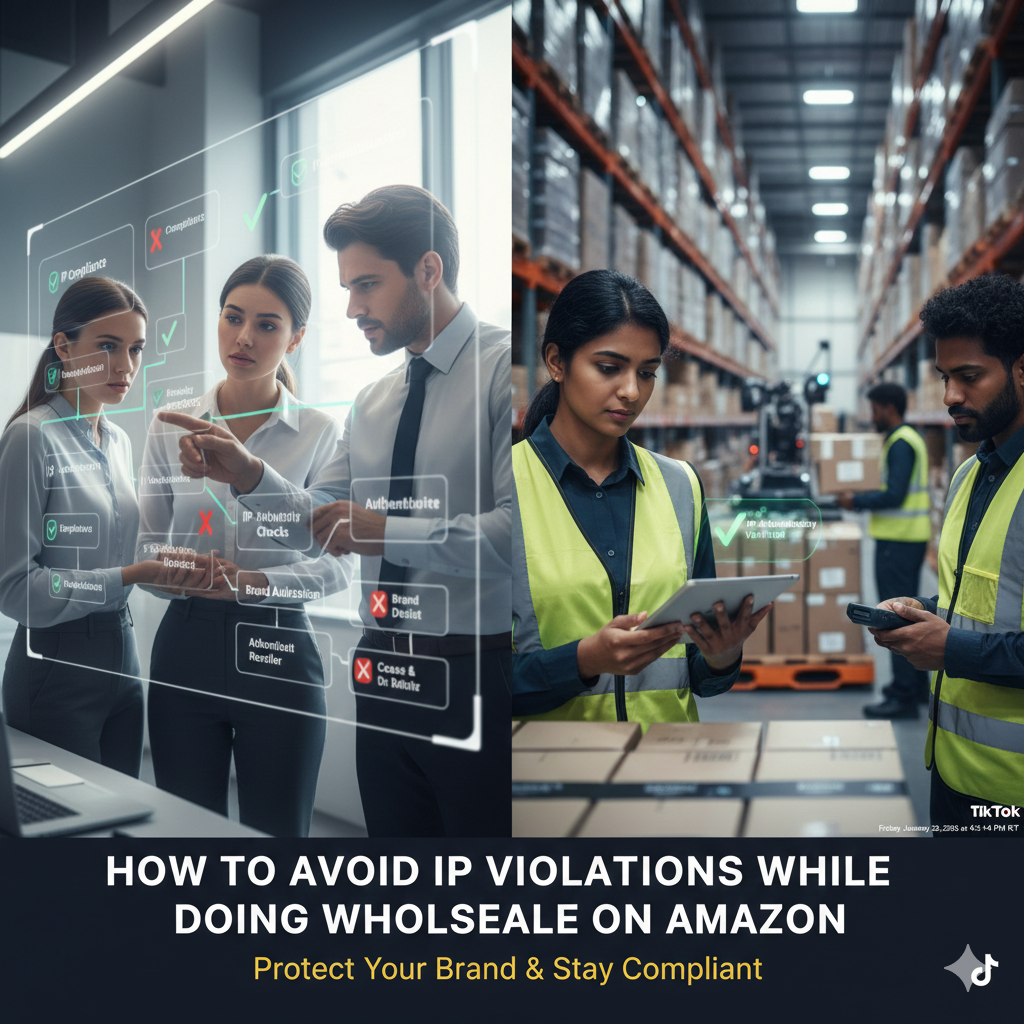
Your Strategy for IP Compliance
Protecting your wholesale business from IP violations requires proactive systems, not reactive damage control. Here’s exactly what you need to do:
Work Exclusively with Verified Authorized Sources
Before sourcing any branded product, verify that your supplier is an authorized distributor for that brand. Don’t take their word for it—request authorization letters or contact the brand directly to confirm.
Build relationships with established distributors who have documented authorization from the brands they carry. Yes, their prices might be slightly higher than gray market sources, but the cost difference is insurance against IP complaints that could destroy your account.
Create Original Content for All Listings
Hire photographers to shoot your own product images, or get written permission from rights holders to use their photography. Keep documentation of these permissions. If you’re using supplier images, get explicit written authorization that you can show Amazon if questioned.
Write original product descriptions that describe features and benefits without copying manufacturer materials. You can reference the same facts—dimensions, specifications, included components—but express them in your own words and structure.
This approach takes more time and costs more money upfront, but it eliminates your exposure to copyright complaints. Original content is also better for SEO and conversion, so you’re not just protecting yourself—you’re improving performance.
Avoid All Unauthorized Trademark Use
Never mention competitor brands in your listings, period. Don’t try to game the system with creative spacing or misspellings—brands actively search for these tactics and file complaints.
Don’t use brand logos in your images, packaging, or promotional materials without permission. Don’t reference trademarks in your backend keywords. The only brand names that should appear in your listings are the products you’re actually selling.
If you need to explain compatibility or fit (like phone cases or replacement parts), use generic descriptors: “Compatible with 2024 smartphone models” rather than specific brand names.
Monitor Category and Brand Restrictions Continuously
Amazon’s gating policies change frequently. Brands that were open yesterday might require approval today. Categories that allowed unrestricted selling last quarter might be gated now.
Check Amazon’s restricted products list regularly. Before sourcing new product lines, verify they’re not in gated categories or restricted by brand registry. If they are, go through the ungating process before you buy inventory.
Subscribe to Amazon seller newsletters and follow their policy updates. Set calendar reminders to review your existing listings quarterly to ensure they’re still compliant with current restrictions.
Respond to Complaints Immediately and Professionally
Despite your best efforts, you might still receive IP complaints—sometimes legitimately, sometimes not. How you respond matters enormously.
When you receive a complaint, gather your documentation immediately and respond within Amazon’s deadline. Provide clear evidence that you’re selling authentic products from authorized sources. Include invoices, authorization letters, and any other relevant proof.
Be professional and factual in your appeals. Don’t make excuses or accusations. Focus on demonstrating that you’re a legitimate wholesale seller with proper authorization and documentation.
The Reality of IP Compliance in 2026
Amazon’s IP enforcement has become increasingly aggressive, and that trend will continue. Brands have more tools than ever to police their trademarks and copyrights, and Amazon has every incentive to side with them.
For wholesale sellers, this creates a challenging environment. You’re selling authentic products through legitimate channels, but you’re still vulnerable to complaints if you don’t have airtight compliance systems.
The good news? Most of your competition still doesn’t understand this. They’re still using unauthorized images, listing gated products without approval, and hoping they don’t get caught. That creates opportunities for sellers who do things right.