
Absolutely! Dropshipping still works on Amazon in 2026 — but only if done correctly. Amazon is getting stricter than ever to protect customers from fraudulent activities and maintain high seller standards. The platform has been continuously updating its systems and revising seller policies to ensure quality products and compliance with Amazon guidelines. We’ve observed that most suspensions happen because sellers unknowingly break Amazon’s dropshipping rules.
Amazon allows dropshipping only when done with authorized suppliers who offer authentic items. You must ensure that you are the seller of record on each item, not your supplier. It’s mandatory to conduct quality inspections of each item before dispatching customer orders. We’re sharing clear, concise guidelines to help you stay safe and compliant.
What Causes Suspensions in 2026?
The following five mistakes can easily lead new sellers to suspension, often without understanding why their account was penalized:
1. Using Retail Stores as Suppliers
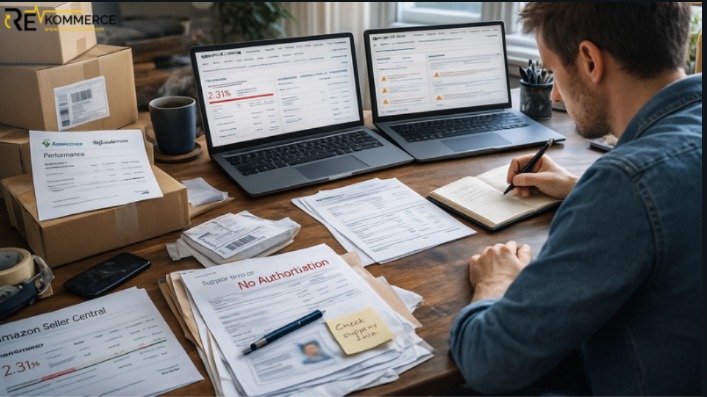
Sourcing from random local suppliers or online retailers like Walmart, Home Depot, and AliExpress was common in the past, but Amazon has made essential changes to its authorized supplier requirements. Amazon has banned all inauthentic suppliers, which include those sourcing items through gray channels or lacking proper supply chain documentation. Amazon’s compliance team considers such suppliers a threat and rejects their invoices.
Under Amazon’s new system, sellers must provide invoices and supporting documents to prove the authenticity of items sold. If a seller provides invoices from Costco, Walmart, Home Depot, AliExpress, or Alibaba, it leads to almost instant suspension.
2. Product Packaging Showing Supplier Branding
Amazon allows sellers to source inventory from authentic suppliers but expects sellers to conduct quality inspections and remove supplier packaging that displays details of another retailer or supplier. Always remove irrelevant supplier branding from product packaging and include your business details on each item while keeping stock in your warehouse.
An item delivered to an Amazon customer with another retailer’s or supplier’s branded packaging can lead to immediate account suspension.
3. Late Shipping & Fake/Slow Tracking
In 2025, Amazon started closely monitoring every parcel sent to customers to ensure timely delivery. Amazon has efficiently designed its systems to easily track parcels and detect when orders are dispatched late or when wrong or fake tracking numbers are entered, misleading customers.
Sellers who fail to provide tracking numbers or provide incorrect tracking information instantly receive policy violations, which sometimes lead to account suspension.
4. Customer Returns Going to Supplier Addresses
Per Amazon policy, each seller must ensure they are the seller of record and provide their return address on each parcel. This allows customers to return items without inconvenience. It’s acceptable to provide the return address of your 3PL service provider or a supplier who accepts returns on your behalf, as long as it’s properly authorized.
5. High-Risk Items & IP Complaints
Authentic items sourced from authorized suppliers give you the freedom to establish a profitable, stable, and long-term business. However, four categories — Books, Music, Video, and DVDs — are considered high-risk. Amazon’s systems closely monitor these categories, and even a small customer complaint or seller mistake can lead to easy suspension. We recommend starting with generic items or secondary brands that don’t frequently file intellectual property complaints on Amazon. This helps you avoid business disruption due to brand complaints. Branded items, supplements, and electronics can trigger fast policy violations.
How to Dropship Safely (Amazon-Approved Method)
1. Use Authorized Wholesalers or Distributors
You can establish a long-term business by selling authentic items sourced from authorized suppliers only. Amazon recommends sellers buy inventory from manufacturers, distributors, or authorized wholesalers to ensure policy compliance. We recommend working with authorized wholesale suppliers who ship items in neutral packaging.
2. Use a 3PL Fulfillment Center
Amazon allows sellers to engage 3PL/warehouse service providers but asks sellers to select quality providers carefully. You should buy items from your supplier and send the stock to your 3PL/warehouse, where quality inspections will be conducted, supplier packaging will be removed, and your business packaging will be applied to each item. The 3PL fulfillment center inventory flow should be: Supplier → Your 3PL → Customer
3. Upload Tracking on Time
Amazon wants sellers to upload valid tracking information within the handling time as soon as parcels are prepared and ready for carrier pickup. This helps Amazon Prime customers know their order status and track orders in real-time, providing peace of mind and value for their money.
4. Control All Returns
As a seller, it’s your responsibility to address customer concerns. If a customer has any questions about their order, you should respond within 12 hours. If a customer isn’t satisfied with their purchase, provide an easy return facility. The return address must be yours or your 3PL’s address — never your supplier’s.
Note: Most dropshipping suspensions happen due to using retail suppliers or branded packaging, where sellers fulfill customer orders directly from an online retailer. This not only creates confusion for buyers, but third-party packaging and visible price tags can create significant inconvenience for Amazon Prime buyers who pay a monthly subscription fee for premium service.
Follow this updated 2026 checklist, and you’ll run your dropshipping business safely, long-term, and without risking account deactivation.