
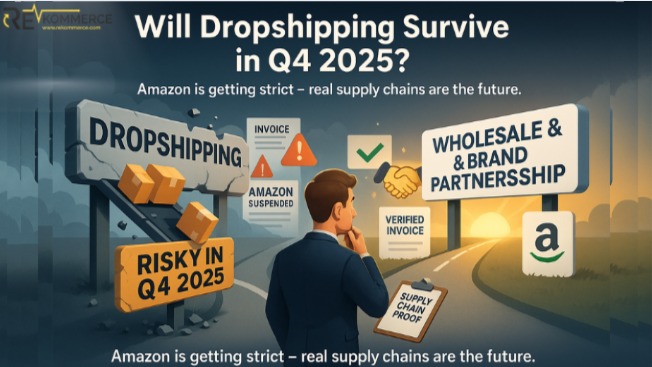
In 2025, many new sellers think they can start selling on Amazon without spending money upfront because of social media influencers’ “zero inventory” stories. But Amazon is now strict with sellers who buy products from other online retail stores and resell them on Amazon. Amazon wants sellers to show proof of authenticity of their items, like real wholesaler/ brand invoices. Since store receipts aren’t enough, many drophippers are having trouble meeting Amazon’s guidelines, and the dropshipping model is failing for most.
Why Dropshipping Is Risky?
Amazon is prioritizing strong policy compliance, such as:
- Authorized Product Sourcing
- Authorization letter
- Supply chain transparency
- Verified Supplier
- Legitimate Invoice & supporting Documents
Stores like Walmart, Target, and Costco aren’t approved sources to source items and resell on amazon. Their receipts don’t prove product authenticity for Amazon’s compliance checks.
What Amazon Checks During Review
When listings get flagged or authenticity complaints are raised, Amazon’s compliance review focuses on:
- Supplier legitimacy
- Brand authorization relationship
- Invoice format and distributor data
- Legal identity and address match
- Business registration consistency
- Tax alignment with business model
Dropship sellers fail here because they don’t have official reseller authorization or direct B2B supply chain evidence.
How to do safe Dropshipping In Q4-2025
The sustainable direction for sellers in Q4-2025 is:
- To purchase stock in bulk from a supplier
- Always source from an authentic supplier who accepts customer returns on the seller’s behalf
- Take complete invoices from the supplier
- Take an authorization letter from the supplier or brand if possible
- Avoid shipping customer orders from third-party sellers to customers
Amazon’s decisions are based on documentation, not assumptions, which is why retail flipping is losing acceptance and wholesale is becoming the preferred model for long-term stability.
A highly professional team of Rekommerce supports sellers with professional guidance to help them operate within safer sourcing models and reduce suspension risk in Q4.