
Many Amazon sellers assume that if they personally follow Amazon’s policies, their account is completely safe. Unfortunately, that’s not always the case.
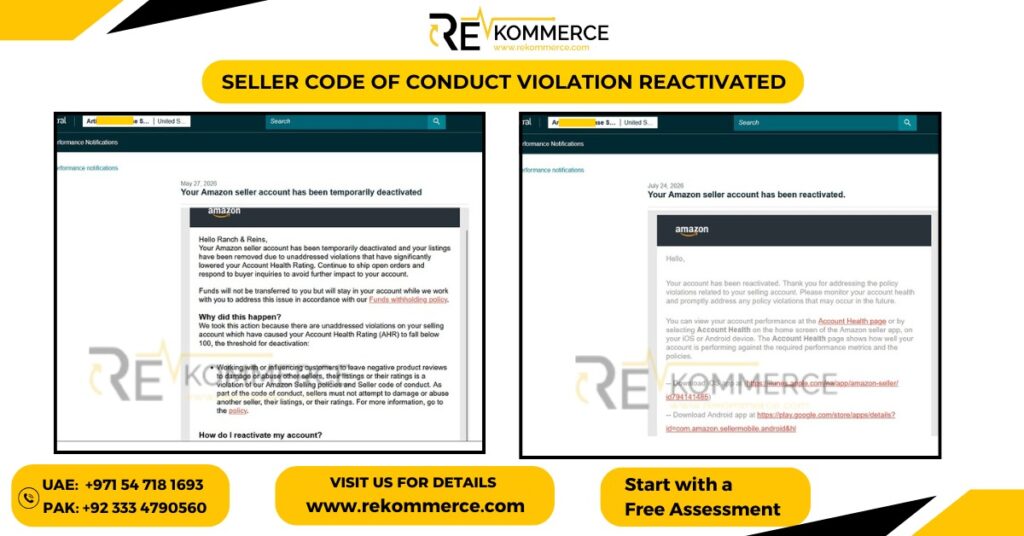
Recently, we worked with an Amazon seller whose account was suspended for an alleged Seller Code of Conduct violation.
Amazon’s investigation stated that the seller had:
• Purchased products from four different Amazon sellers.
• Left negative reviews on those products.
• Attempted to damage competing sellers.
Naturally, the seller was shocked.
After conducting a detailed investigation, we requested access to every relevant account and carefully reviewed the activity.
What we discovered completely changed the direction of the case.
The seller had never placed those orders.
The seller had never submitted those reviews.
Instead, an employee who had been granted access to the business had used the associated Amazon buyer account to purchase products for personal use. Although the purchases had nothing to do with the business, Amazon’s automated systems linked that activity to the seller account because of the shared access and account association.
From Amazon’s perspective, the activity appeared to be a violation of the Seller Code of Conduct.
We prepared a comprehensive appeal explaining the actual sequence of events, documented the internal investigation, identified the root cause, and outlined the corrective and preventive actions implemented by the business.
The result?
The Amazon seller account was successfully reactivated, allowing the business to resume normal operations.
What Every Amazon Seller Should Learn From This
Your Amazon account is responsible not only for your own actions but also for the actions of anyone who has access to your business.
Here are a few important precautions:
✔ Grant user permissions only to trusted team members.
✔ Never allow employees to use company-associated buyer accounts for personal shopping.
✔ Keep business and personal Amazon accounts completely separate.
✔ Regularly review user permissions and remove access for former employees immediately.
✔ Create clear internal policies regarding Amazon account usage.
✔ Monitor account activity frequently to identify unusual behavior before it becomes a serious issue.
Many suspensions happen because of internal mistakes rather than intentional policy violations. A single employee’s action can trigger automated enforcement that puts an entire business at risk.
If your Amazon Seller Account has been suspended due to Seller Code of Conduct, Account Health issues, Section 3 violations, Related Account, Product Authenticity, IP Complaints, or other Amazon policy violations, don’t panic. Every case deserves a proper investigation before submitting an appeal.