
What makes supply chain verification particularly stressful is that many sellers don’t fully understand what Amazon is actually looking for. You might have legitimate products from authorized sources, but still fail verification because your documentation doesn’t meet Amazon’s specific requirements or because you don’t understand the distinctions of what they’re really trying to confirm.
After helping hundreds of sellers navigate supply chain verification processes, I’ve seen the common pitfalls that lead to failures and, more importantly, discovered the strategies that lead to successful verification. Let me share what actually causes these failures and how you can pass verification with confidence.
What Is Supply Chain Verification and Why Does Amazon Require It?
Supply chain verification is Amazon’s process for confirming that sellers are sourcing their products from legitimate, authorized channels. When Amazon initiates this verification, they’re essentially asking: “Can you prove your products are authentic and obtained through proper distribution channels?”
This isn’t just bureaucratic box-checking. Amazon faces immense pressure from brands, consumers, and regulators to contest counterfeit products. High-profile cases of fake products causing safety issues, brand reputation damage, and customer dissatisfaction have made supply chain verification a critical component of Amazon’s marketplace integrity efforts.
Amazon typically triggers supply chain verification in several situations: when you’re selling branded products without Brand Registry enrollment, after receiving customer complaints about authenticity, when listing products in gated or restricted categories, when your account shows unusual sales velocity in branded products, or when brands specifically request verification of sellers offering their products.
Understanding why Amazon requires verification helps you appreciate what they’re truly evaluating—not just paperwork, but legitimate business operations that protect customers and brand owners.
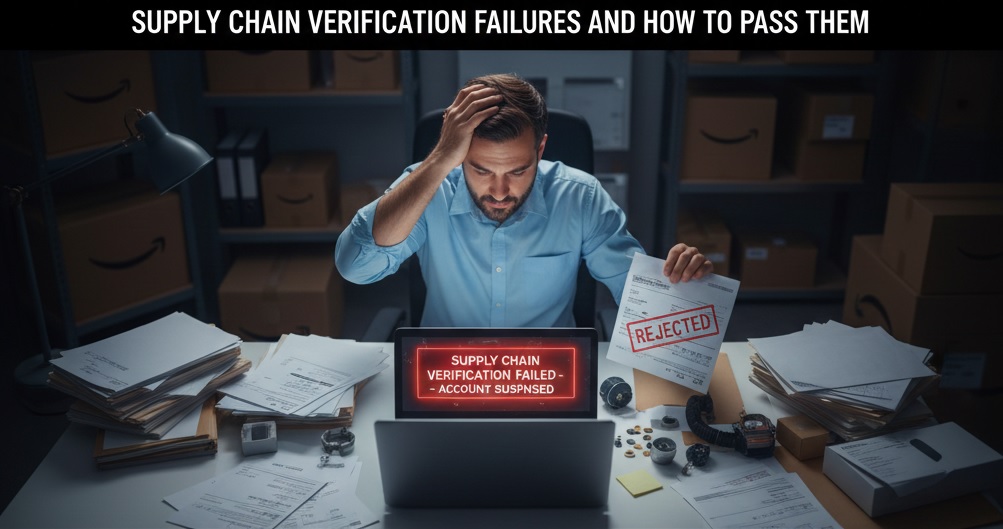
Common Causes of Supply Chain Verification Failures
Incomplete or Generic Invoices
This is the number one reason sellers fail supply chain verification. Amazon has specific invoice requirements, and generic purchase orders or receipts simply don’t cut it.
I’ve reviewed countless failed verifications where sellers submitted what they believed were proper invoices, only to have Amazon reject them for missing critical elements. The invoice must include your business name exactly as registered in Seller Central, not an individual’s name or an abbreviated version. It must show the supplier’s complete business information including company name, full address, and contact information—not just a website URL or email.
Product details must be itemized and specific. An invoice listing “Assorted Electronics” Or “Mixed Inventory” fails because Amazon can’t verify which specific products you purchased. The description should match the brands and product types you’re selling, ideally with model numbers or identifying details.
Purchasing from Unauthorized Distributors or Resellers
Here’s where many sellers get tripped up: having a legitimate invoice doesn’t automatically mean you’re sourcing from an authorized channel. Brands maintain authorized distributor networks, and purchasing outside these channels—even if the products are genuine—can fail verification.
Amazon’s verification often focuses on whether your supplier is authorized by the brand to distribute their products. If you purchased from a liquidation company, discount wholesaler, or gray market reseller, your invoice might be real but your supplier isn’t authorized, which fails verification.
I worked with a seller who purchased branded beauty products from a liquidation company with a legitimate business license and proper invoicing. The products were genuine, not counterfeit. However, when Amazon contacted the brand during verification, the brand confirmed the liquidation company wasn’t an authorized distributor. Verification failed despite having authentic products and real invoices.
The challenge is that many sellers don’t realize this distinction when building their supply chains. They find good deals through wholesalers or liquidators without understanding that brands control their distribution channels and Amazon respects those boundaries.
Unverifiable Supplier Information
Amazon doesn’t just look at your invoices—they verify them. They may contact your suppliers directly to confirm the transactions, check that the supplier’s business is legitimate and operational, or verify that the supplier is authorized to distribute the brands in question.
When suppliers can’t be verified, problems arise. Perhaps the supplier’s phone number on the invoice is disconnected, their business address is a virtual office or residential location that raises questions, their website is inactive or appears unprofessional, or they simply don’t respond to Amazon’s verification requests.
Some suppliers, particularly smaller wholesalers or distributors, don’t appreciate Amazon contacting them or refuse to provide confirmation. From their perspective, your business relationship is confidential. But from Amazon’s perspective, refusing to verify suggests something’s being hidden.
I encountered a situation where a seller purchased from a small, legitimate distributor who was authorized by the brand. However, when Amazon contacted them for verification, the distributor became defensive about privacy concerns and refused to confirm the transaction. The seller’s verification failed not because anything was wrong, but because the supplier wouldn’t cooperate with Amazon’s process.
Products Purchased from Retail Stores
This is a surprisingly common issue, especially with newer sellers or those doing retail arbitrage. Purchasing products from retail stores like Walmart, Target, or Costco and then reselling on Amazon might seem like legitimate business, but it fails supply chain verification.
Retail receipts aren’t considered proper invoices because retail stores aren’t authorized distributors—they’re the end point of the distribution chain, meant for consumers. The invoice must come from a point earlier in the supply chain: the manufacturer, authorized distributor, or authorized wholesaler.
Even if you purchase large quantities from a retail store and get an itemized receipt, it doesn’t establish an authorized supply chain relationship. Brands don’t authorize their products to be purchased at retail and resold on Amazon.
Altered or Modified Documentation
This should go without saying, but attempting to pass off altered invoices is an immediate and often permanent failure. Amazon has sophisticated document verification processes and relationships with major brands and distributors.
Editing supplier names, changing quantities or dates, using template invoices with filled-in information, or creating documents that appear official but aren’t genuine supplier invoices—all lead to not just verification failure but potential permanent account deactivation for fraud.
Insufficient Purchase Quantities
Amazon analyzes whether your documented purchases reasonably align with your sales volume. If you’ve sold 1,000 units of a product but can only provide invoices for 100 units, the obvious question is: where did the other 900 units come from?
This doesn’t mean you need invoices for exact quantities matching sales. Normal business operations include inventory from multiple purchases over time. However, the documented purchases should be proportionate and reasonable.
The challenge arises when sellers source from multiple suppliers, using authorized distributors for some inventory but supplementing with unauthorized sources when they find better deals or when authorized channels run low. They might have legitimate invoices for a portion of their inventory but can’t document the complete supply chain.
How to Pass Supply Chain Verification Successfully
Build Relationships with Authorized Distributors from the Start
The single most important factor in passing verification is sourcing from authorized distributors from day one. Before purchasing inventory, research the brand’s authorized distributor network.
Visit the brand’s website and look for authorized dealer or distributor information. Contact the brand directly to ask who their authorized distributors are for your region. Request written confirmation of distributor authorization if possible.
Yes, authorized distributors typically have higher prices than gray market sources, liquidators, or retail arbitrage opportunities. But the price difference is insurance against verification failures and account suspensions that could destroy your entire business.
Maintain Thorough Documentation Standards
Create systems for managing your supply chain documentation from the moment you start sourcing products. Keep digital and physical copies of all invoices, store documents in organized folders by supplier, product category, and date, and ensure every invoice contains all required elements before accepting it from your supplier.
When requesting invoices from suppliers, specifically ask for documentation that includes your complete business name as registered with Amazon, supplier’s complete business information with contact details, itemized product descriptions with brand names and model numbers, clear quantity and date information, and supplier letterhead or official formatting that demonstrates legitimacy.
Match Everything Precisely
Pay obsessive attention to matching details. Your business name on every invoice must exactly match your Seller Central registration—same spelling, same punctuation, same legal entity designation (LLC, Inc., etc.).
Verify that addresses, phone numbers, and other details remain consistent across your Amazon account and your supplier documentation. If you change business addresses or phone numbers, update everything simultaneously and keep records of the changes in case you need to explain historical discrepancies.
Prepare Verification Packages Before They’re Requested
Don’t wait for Amazon to request verification. Proactively prepare verification packages for your key products. Create folders containing invoices from authorized distributors for your top-selling ASINs, authorization letters from brands if applicable, business registration documents showing your legal entity, any category-specific certifications or approvals required, and supplier contact information.
Having these packages ready means you can respond quickly and comprehensively when Amazon requests verification. Delayed responses or multiple submission attempts raise additional red flags.
Communicate Proactively with Amazon
When submitting verification documentation, don’t just upload files without context. Include a cover letter explaining what you’ve provided, referencing specific documents by name, demonstrating that you understand what Amazon is verifying, and showing that your supply chain is legitimate and authorized.
If there are any unique circumstances—for instance, you’re a new seller with limited purchase history but can provide brand authorization—explain these proactively rather than leaving Amazon to make assumptions.
Use Professional Services When Needed
If you’re working with international suppliers, unclear documentation, or complex supply chain situations, consider using professional services like customs brokers who can provide proper import documentation, translators who can provide certified translations of international invoices, or consultants who specialize in Amazon supplier verification.
The cost of these services is minimal compared to the cost of account suspension.
What to Do If You’ve Failed Verification
If you’ve already failed supply chain verification, don’t panic—but do take it seriously. Analyze exactly why you failed by reviewing Amazon’s specific objections, identifying which documentation elements were insufficient, and determining whether your supply chain is actually authorized.
If your supply chain isn’t from authorized sources, you need to establish new supplier relationships with authorized distributors before resubmitting. Providing the same inadequate documentation repeatedly won’t change the outcome.
If your documentation was simply incomplete or improperly formatted but your supply chain is legitimate, work with your suppliers to obtain proper invoices meeting all Amazon requirements, gather any additional supporting documentation, and prepare a comprehensive resubmission that addresses every deficiency.
Be honest in your assessment. If you’ve been sourcing from unauthorized channels, no amount of documentation manipulation will pass verification. You need to fundamentally change your supply chain.
Protect Your Account with a Free Supply Chain Audit
Is your supply chain verification-ready? At Rekommerce, we specialize in helping Amazon sellers build robust, compliant supply chains that pass Amazon’s verification with confidence. Our comprehensive audit reviews your supplier relationships, documentation quality, and category-specific requirements—identifying vulnerabilities before they trigger verification failures. Whether you’re facing current verification requests or want to ensure prevention, our expert team provides actionable strategies for supply chain compliance. Contact us today for your complimentary supply chain audit and secure your Amazon business against verification risks